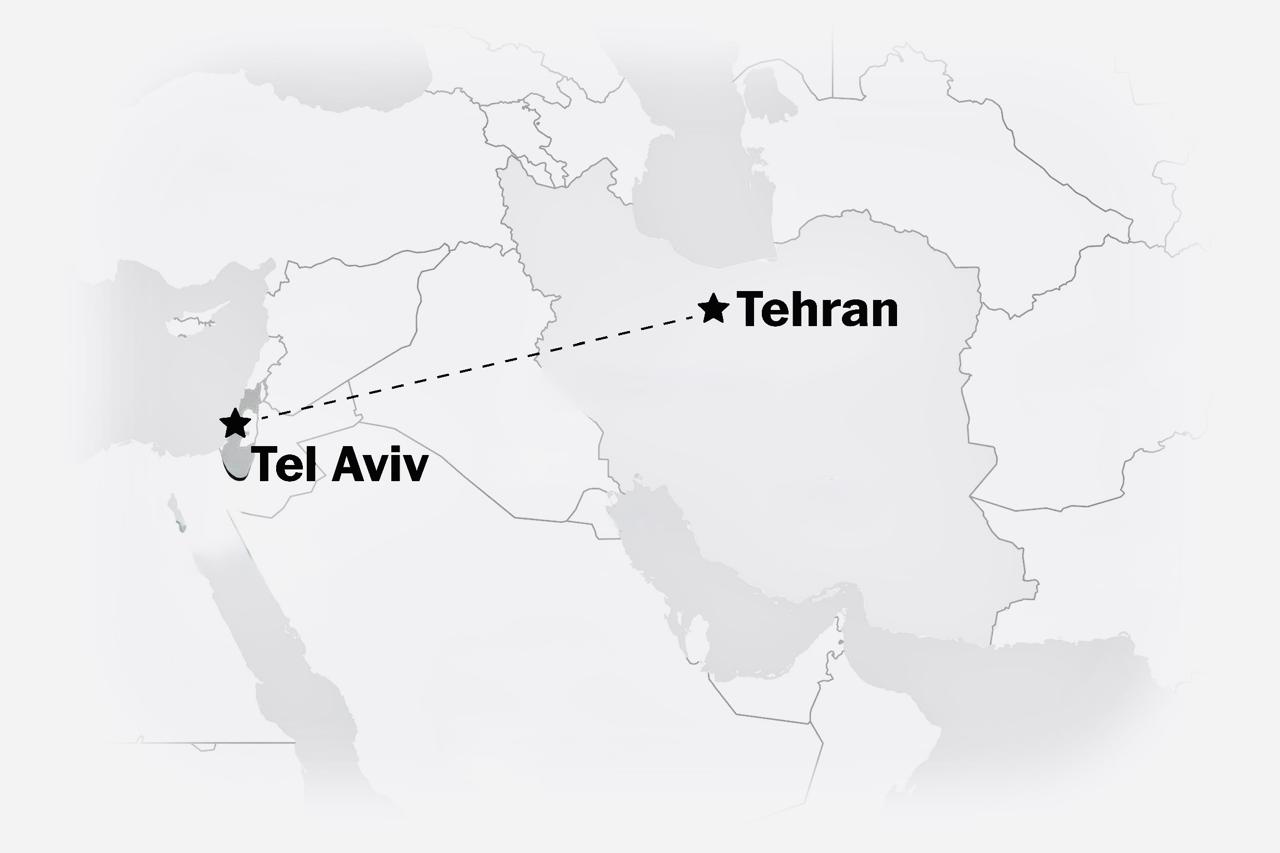
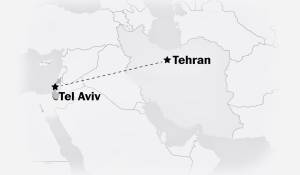
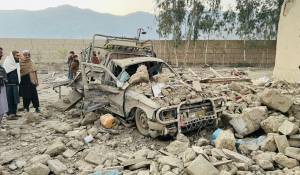
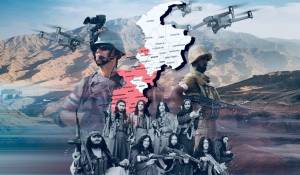
The numbers tell a story that strategists in Tel Aviv and Washington did not anticipate. Weeks into the 2026 Iran War, since the joint US-Israeli decapitation strikes of 28 February that eliminated Supreme Leader Ayatollah Ali Khamenei, several members of the Supreme National Security Council and key IRGC commanders, Tehran has fired over 1,200 ballistic missiles and 3,500 plus drones in successive salvos. Israeli Iron Dome and Arrow systems have intercepted roughly 65 percent (1), but dozens have still struck military and energy targets inside Israel. US bases in the Gulf and Diego Garcia have absorbed waves of attacks. The Strait of Hormuz has seen intermittent closures, sending Brent crude spiking above $109.24 per barrel. (2)
Civilian casualties are mounting. Economic damage runs into tens of billions. This is no longer a limited "pre-emptive" campaign. It has become something far more consequential, a doctrinal showdown between two fundamentally incompatible military philosophies.
On one side stands Israel's “Takhbula”; the ancient Hebrew art of stratagem, refined into modern lightning decapitation and psychological shock. On the other hand, Iran's Mosaic Doctrine is a deliberately decentralised, resilient defence architecture designed precisely for the day the centre is destroyed. From the mountains of Zagros to the waters of Hormuz, the mosaic is holding. The early military balance sheet suggests what military theorists have long suspected: the defender is outperforming the attacker in both endurance and strategic depth.
The Three Pillars That Refuse to Break
To understand why Iran refuses to fold, one must go back to 1979. The Islamic Revolution rests on three interlocking pillars that make it fundamentally different from the secular, interest-driven policies of Israel and the United States. Western analysts who dismiss Iranian resistance as mere stubbornness miss the deeper architecture at work.
The first pillar is Shiaism as a global religion. Ayatollah Khomeini did not confine Shia Islam to Iran; he universalised it through the doctrine of Velayat-e Faqih and the export of revolution. Every IRGC Quds Force officer is trained as both soldier and ideological missionary. This creates a transnational network, Hezbollah, Hashd al-Shaabi, Houthis, Zainbayun, Fatmityun and beyond — that functions as a kind of "Shia International."
Israel, as a Jewish ethno-state, and America, as a secular superpower, have no equivalent ideological export mechanism. Tehran's war is therefore framed as a religious duty, not merely a national one.
The second pillar is "Marg Bar America." This is not sloganising; it is state ideology. The collective memory of the 1953 CIA coup, the Iran-Iraq War when the US tilted toward Saddam, and four decades of "maximum pressure" sanctions have produced a society psychologically hardened against external coercion. While Washington and Tel Aviv calculate in cost-benefit terms, Tehran calculates in existential terms. The distinction matters more than Western policymakers care to admit.
The third pillar is Palestine as the moral core. Iran's support for the Palestinian cause is non-negotiable. It legitimises the regime at home and across the Muslim world. Missiles fired toward Israel carry the slogan "Labbaik Ya Palestine." This moral framing gives Iran a narrative superiority that Israel's "self-defence" argument struggles to match in the opinion of the global south. These three pillars turn Iran's conflict into a war of survival, regime, ideology, and territory all at stake simultaneously. Israel and the United States, by contrast, are fighting a war of choice, a calculated bid to restore deterrence, prevent nuclear breakout, and reshape the region before the next US election cycle. History shows wars of survival almost always outlast wars of choice. Vietnam taught that lesson. Afghanistan 2001-2021 reinforced it.
Stratagem Meets Mosaic
The strategic DNA of both sides reveals why this war has defied early predictions. Israel's Takhbula is the modern evolution of biblical stratagem, deception, precision, and overwhelming first strike. It was visible in the 2020 Soleimani assassination, the Stuxnet cyber campaign, and now the 28 February decapitation. The doctrine seeks to collapse enemy command in 72-96 hours, shatter civilian will through disproportionate damage, and force quick capitulation. It is high-tech, intelligence-centric, and designed for short, sharp victories. Iran's Mosaic Doctrine, formally developed by IRGC’s General Mohammad Ali Jafari after studying the 2003 Iraq War, is its mirror opposite. (3)
After watching how centralised armies collapse under American airpower, Tehran deliberately fragmented its command-and-control into 31 provincial "mosaics." Each province operates as a semi-independent theatre: local IRGC commander, Basij mobilisation, pre-positioned missile batteries, drone factories, underground fuel depots, and standing orders to continue fighting even if Tehran falls silent.
Communication is deliberately low-tech, couriers, shortwave, and pre-agreed codes, to survive cyber and electromagnetic disruption.
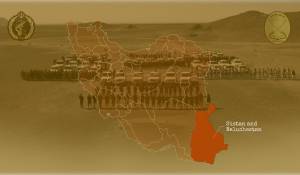
The result is visible today. Even with the Supreme Leader and General Staff gone, provincial commands in Isfahan, Khuzestan, and Sistan-Baluchestan continue launching coordinated barrages. The mosaic simply shifted its centre of gravity from Tehran to the periphery.
Takhbula might have removed the head. The body keeps moving.
Built for the Long Haul
Iran is uniquely engineered for independent, prolonged conflict, a reality its adversaries underestimated. After 45 years of sanctions, Iran manufactures 80-85 percent of its munitions domestically, from Shahed-136 drones to Fateh-313 and Sejjil ballistic missiles. Its underground missile cities, reportedly dozens, and mountain tunnel networks make targeting extremely difficult. The Basij, a one-million-strong paramilitary, provides inexhaustible manpower motivated by Shia martyrdom theology. The pain thresholds tell the deeper story.
The mosaic is still standing. Whether Takhbula can finally shatter it or whether the world learns to live with a bloodied but unbroken Iran will define the Middle East for the next generation.
Israeli society has already seen protests against prolonged mobilisation. American domestic support for open-ended Middle East wars evaporated within months in Iraq and Afghanistan. Iran's theocracy, by contrast, draws legitimacy from suffering. The IRGC's provincial commanders have pre-delegated authority to escalate independently.
As one surviving IRGC general told state television last week: "They can kill our leaders. They cannot kill our doctrine."
As the defender on home soil, Iran enjoys every classical asymmetric advantage: strategic depth, knowledge of terrain, interior lines of communication, and a proxy network stretching from Israel to the US across five theatres, Lebanon, Syria, Iraq, Yemen, and the Gulf.
History repeatedly shows that motivated defenders with decentralised structures defeat high-tech expeditionary forces. The pattern holds.
The Ancient Fault Line Reopens
The war has reignited a cleavage far older than the Islamic Republic itself, the historic Arab-Persian divide.
"Ajam", originally meaning "non-Arab speaker", became a political weapon during the Iran-Iraq War of 1980-88, when Saddam framed the conflict as Arab defence against Persian expansion. Saudi Arabia, UAE, and Bahrain still view Iran through this lens: revolutionary Shia power threatening the Sunni Arab monarchy. Yet geography mocks ideology.
The same Strait of Hormuz that Iran can paralyse carries 21 million barrels of oil daily, much of it Saudi and Emirati. Tehran has already demonstrated it can selectively close the strait through mining, fast-boat swarms, and anti-ship missile batteries on the islands of Abu Musa and Greater Tunb.
Every week of disruption costs the global economy an estimated $8-10 billion and hits Gulf exporters hardest. Iran is weaponising the very chokepoint its neighbours depend upon, classic Mosaic logic of turning defence into economic coercion.
The Arab states wanted Iran weakened. They may get Iran desperate, which is far more dangerous.
The Nuclear Shadow Lengthens
The likelihood of Iran weaponising its nuclear programme has jumped from "possible" to "probable" within months.
Pre-war breakout time was estimated in weeks. With the regime under existential pressure and key nuclear scientists reportedly targeted in the initial strikes, hardliners inside the IRGC are openly arguing that only a nuclear deterrent can prevent further Takhbula operations.
The theological barrier, Khamenei's fatwa against nuclear weapons, was already under strain. If provincial commanders conclude that regime survival is at stake, that fatwa will be reinterpreted or quietly set aside. Iran already possesses enough 60 percent enriched uranium for multiple bombs. A letter circulated by the Ulema has already asked the new Ayatollah to review the previous Fatwa.
Israel has repeatedly stated it will not permit a nuclear Iran and maintains the "Begin Doctrine" of pre-emptive strikes. The US would almost certainly join any such operation. The danger is escalation to full nuclear exchange. Iran could calculate that mutual assured destruction would finally end the cycle of Takhbula strikes. The world is now one miscalculation away from the first nuclear use since 1945.
Pakistan's Tightrope
Of all the regional powers watching this conflict unfold, none sits in a more delicate position than Pakistan.
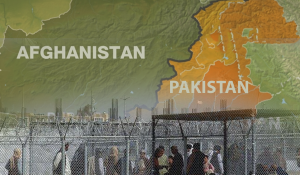
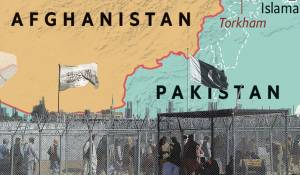
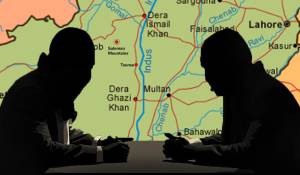
Sharing a 909-kilometre border with Iran [much of it porous Balochistan terrain], Islamabad cannot ignore refugee flows, possible militant spillover, or sectarian tensions among its own 40-million-strong Shia population. At the same time, its 2025 defense pact with Saudi Arabia and massive economic stakes in the GCC — remittances, defense contracts, energy imports, demand caution.
So far, Pakistan has performed sophisticated diplomacy.
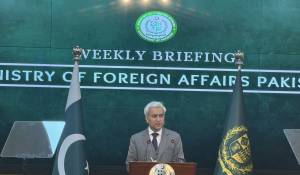
Prime Minister Shehbaz Sharif and Army Chief General Syed Asim Munir have maintained open military-to-military channels with both Tehran and Riyadh. Foreign Minister Ishaq Dar publicly cautioned Iran against targeting Gulf infrastructure while simultaneously offering Pakistan as a neutral venue for talks. Information Minister Attaullah Tarar has floated the idea of an OIC-brokered ceasefire.
Behind the scenes, ISI has reportedly shared limited intelligence with Iran on Baloch separatist groups while quietly reassuring Saudi Arabia of Pakistan's commitment to Gulf security. This is not fence-sitting. It is statecraft.
Pakistan's challenge is to prevent the conflict from becoming an Iran-GCC proxy war on its own western flank while protecting CPEC-related interests and avoiding domestic Shia-Sunni polarisation. The margins for error are thin. The consequences of misstep are severe.
The Balance Sheet
The Takhbula has delivered tactical shocks but failed to achieve strategic collapse. The Mosaic Doctrine, resilient, decentralised, and ideologically fuelled, is proving more durable in the attritional phase. Iran is not winning conventionally, but it is denying Israel and the United States the quick victory they needed. Wars of survival have a habit of outlasting wars of choice.
Pakistan's role remains pivotal. By staying neutral yet engaged, Islamabad can help drag this conflict toward a negotiated off-ramp before the nuclear shadow lengthens further. The mosaic is still standing. Whether Takhbula can finally shatter it or whether the world learns to live with a bloodied but unbroken Iran will define the Middle East for the next generation.
1. Official IDF reports as of April 2, 2026, continue to claim an interception rate of 90-92%. However, independent analysts and reports from outlets like El País and JINSA point to a "dangerous imbalance" that supports the 65% premise in specific high-intensity salvos, see further: https://english.elpais.com/international/2026-04-02/israel-rations-interceptor-missiles-amid-risk-of-falling-into-a-war-of-attrition-with-iran.html & https://www.csis.org/analysis/assessing-air-campaign-after-three-weeks-iran-war-numbers#:~:text=This%20drop%20occurred%20as%20the,were%20disabled%20by%20Day%2016.
2. The international benchmark Brent crude rose to $109.74 before settling at $109.24 per barrel on April, 2, 2026. West Texas Intermediate (WTI) crude also advanced, briefly climbing to $113.93, before closing the session at $111.54 per barrel. https://www.aa.com.tr/en/energy/oil/oil-prices-steady-as-markets-close-for-good-friday/56113#:~:text=Oil%20prices%20were%20flat%20on,%24109.24%20per%20barrel%20on%20Thursday.
3. The Iran Primer. (2010/Updated 2024). Iran's Military Doctrine. United States Institute of Peace (USIP). [Reference to Jafari’s role and 2005 doctrine adoption] https://iranprimer.usip.org/resource/irans-military-doctrine see also Haghshenass, F. (2008). Iran's Asymmetric Naval Warfare. The Washington Institute for Near East Policy & Salsabili, M. (2013). Iran and Weapons of Mass Destruction: The Military Dynamics of Nonproliferation. Belfer Center for Science and International Affairs, Harvard Kennedy School.
Bibliography
Abrahamian, Ervand. A History of Modern Iran. Cambridge: Cambridge University Press, 2008.
Adamsky, Dima. The Culture of Military Innovation: The Impact of Cultural Factors on the Revolution in Military Affairs in Russia, the US, and Israel. Stanford: Stanford University Press, 2010.
Afzal, Madiha. Pakistan Under Siege: Extremism, Society, and the State. Washington, DC: Brookings Institution Press, 2018.
Albright, David, and Sarah Burkhard. "Iran's Stock of 60% HEU and Implications for a Nuclear Weapon." Institute for Science and International Security, ISIS Report, December 2024.
Alfoneh, Ali. "The Basij Resistance Force." In The Iran Primer: Power, Politics, and U.S. Policy, edited by Robin Wright, 85–88. Washington, DC: United States Institute of Peace Press, 2010.
Arreguín-Toft, Ivan. How the Weak Win Wars: A Theory of Asymmetric Conflict. Cambridge: Cambridge University Press, 2005.
Biddle, Stephen. Military Power: Explaining Victory and Defeat in Modern Battle. Princeton: Princeton University Press, 2004.
Byrne, Malcolm, and Mark J. Gasiorowski, eds. Mohammad Mosaddeq and the 1953 Coup in Iran. Syracuse: Syracuse University Press, 2004.
Connell, Michael. "Iran's Military Doctrine." In The Iran Primer: Power, Politics, and U.S. Policy, edited by Robin Wright, 76–79. Washington, DC: United States Institute of Peace Press, 2010.
Cordesman, Anthony H., and Martin Kleiber. Iran's Military Forces and Warfighting Capabilities: The Threat in the Northern Gulf. Washington, DC: Center for Strategic and International Studies, 2007.
Dabashi, Hamid. Theology of Discontent: The Ideological Foundations of the Islamic Revolution in Iran. New York: New York University Press, 1993.
Eisenstadt, Michael. "The Strategic Culture of the Islamic Republic of Iran: Religion, Expediency, and Soft Power in an Era of Disruptive Change." Middle East Studies at the Marine Corps University, MES Monographs 7, 2015.
Elleman, Michael. "Iran's Ballistic Missile Program." In The Iran Primer: Power, Politics, and U.S. Policy, edited by Robin Wright, 92–96. Washington, DC: United States Institute of Peace Press, 2010.
Fair, Christine. Fighting to the End: The Pakistan Army's Way of War. New York: Oxford University Press, 2014.
Fürtig, Henner. Iran's Rivalry with Saudi Arabia Between the Gulf Wars. Reading: Ithaca Press, 2002.
Gause, F. Gregory, III. The International Relations of the Persian Gulf. Cambridge: Cambridge University Press, 2010.
Golkar, Saeid. Captive Society: The Basij Militia and Social Control in Iran. New York: Columbia University Press, 2015.
Goodarzi, Jubin M. Syria and Iran: Diplomatic Alliance and Power Politics in the Middle East. London: I.B. Tauris, 2006.
Henkin, Yagil. "The Israeli Concept of 'Victory' and How It Shaped Military Doctrine." Military Operations 2, no. 3 (2014): 14–17.
Hiltermann, Joost. A Poisonous Affair: America, Iraq, and the Gassing of Halabja. Cambridge: Cambridge University Press, 2007.
Hinz, Fabian. "The Iranian Missile Threat." International Institute for Strategic Studies, Strategic Dossier, November 2023.
International Atomic Energy Agency. "IAEA Director General's Report: Verification and Monitoring in the Islamic Republic of Iran in Light of United Nations Security Council Resolution 2231 (2015)." GOV/2024/47. Vienna: IAEA, September 2024.
International Monetary Fund. Regional Economic Outlook: Middle East and Central Asia. Washington, DC: International Monetary Fund, October 2024.
Katzman, Kenneth. Iran: Internal Politics and U.S. Policy and Options. Congressional Research Service Report RL32048. Washington, DC: Congressional Research Service, 2024.
Khalaji, Mehdi. "Apocalyptic Politics: On the Rationality of Iranian Policy." The Washington Institute for Near East Policy, Policy Focus 79, 2008.
Khan, Rashid Ahmad. "Pakistan and the OIC: A Study of Pakistan's Role in OIC since 1969." Pakistan Horizon 66, no. 3 (July 2013): 77–95.
Kroenig, Matthew. A Time to Attack: The Looming Iranian Nuclear Threat. New York: Palgrave Macmillan, 2014.
Levy, Yagil. Israel's Death Hierarchy: Casualty Aversion in a Militarized Democracy. New York: New York University Press, 2012.
Logevall, Fredrik. Choosing War: The Lost Chance for Peace and the Escalation of War in Vietnam. Berkeley: University of California Press, 1999.
Luft, Gal. "The Strait of Hormuz: The World's Most Important Oil Chokepoint." In Energy Security Challenges for the 21st Century, edited by Gal Luft and Anne Korin, 137–154. Santa Barbara: Praeger Security International, 2009.
Luttwak, Edward N. Strategy: The Logic of War and Peace. Rev. ed. Cambridge, MA: Harvard University Press, 2001.
Lynch, Marc. The New Arab Wars: Uprisings and Anarchy in the Middle East. New York: PublicAffairs, 2016.
Mack, Andrew. "Why Big Nations Lose Small Wars: The Politics of Asymmetric Conflict." World Politics 27, no. 2 (January 1975): 175–200.
Malkasian, Carter. The American War in Afghanistan: A History. New York: Oxford University Press, 2021.
Milani, Mohsen. The Making of Iran's Islamic Revolution: From Monarchy to Islamic Republic. 2nd ed. Boulder: Westview Press, 1994.
Mueller, John E. "The Iraq Syndrome." Foreign Affairs 84, no. 6 (November/December 2005): 44–54.
Nakdimon, Shlomo. First Strike: The Exclusive Story of How Israel Foiled Iraq's Attempt to Get the Bomb. New York: Summit Books, 1987.
Nasr, Vali. The Shia Revival: How Conflicts within Islam Will Shape the Future. New York: W.W. Norton, 2006.
Ostovar, Afshon. "The Grand Strategy of Militant Clients: Iran's Way of War." Security Studies 28, no. 1 (2019): 159–188.
Ostovar, Afshon. Vanguard of the Imam: Religion, Politics, and Iran's Revolutionary Guards. New York: Oxford University Press, 2016.
Pape, Robert A. Bombing to Win: Air Power and Coercion in War. Ithaca: Cornell University Press, 1996.
Posen, Barry. Restraint: A New Foundation for U.S. Grand Strategy. Ithaca: Cornell University Press, 2014.
Rezaei, Farhad. Iran's Nuclear Program: A Study in Proliferation and Rollback. Cham: Palgrave Macmillan, 2017.
Rubin, Uzi. "Israel's Air and Missile Defense: Evolution and Future Challenges." Strategic Assessment 24, no. 3 (2021): 42–58.
Salehi-Isfahani, Djavad. "Iran's Economy under Sanctions." The Iran Primer, United States Institute of Peace. Updated 2023. https://iranprimer.usip.org/resource/irans-economy.
Small, Andrew. The China-Pakistan Axis: Asia's New Geopolitics. New York: Oxford University Press, 2015.
Smyth, Phillip. "The Shiite Jihad in Syria and Its Regional Effects." The Washington Institute for Near East Policy, Policy Focus 138, 2015.
Talmadge, Caitlin. "Closing Time: Assessing the Iranian Threat to the Strait of Hormuz." International Security 33, no. 1 (Summer 2008): 82–117.
Thaler, David E., Alireza Nader, Shahram Chubin, Jerrold D. Green, Charlotte Lynch, and Frederic Wehrey. Mullahs, Guards, and Bonyads: An Exploration of Iranian Leadership Dynamics. Santa Monica: RAND Corporation, 2010.
U.S. Energy Information Administration. "World Oil Transit Chokepoints." Analysis Report. Updated August 2023. https://www.eia.gov/international/analysis/special-topics/World_Oil_Transit_Chokepoints.
Weinbaum, Marvin G., and Abdullah B. Khurram. "Pakistan and Saudi Arabia: Deference, Dependence, and Deterrence." Middle East Journal 68, no. 2 (Spring 2014): 211–228.
Yusuf, Huma. "Sectarian Violence: Pakistan's Greatest Security Threat?" Norwegian Peacebuilding Resource Centre, NOREF Report, 2012.
Zetter, Kim. Countdown to Zero Day: Stuxnet and the Launch of the World's First Digital Weapon. New York: Crown Publishers, 2014.
Zilber, Neri. "The Soleimani Strike and Israeli 'Targeted Killings'." The Washington Institute for Near East Policy, Policy Watch 3244, January 2020.
Zimmt, Raz. "Debates Inside Iran Over Nuclear Weapons and the Khamenei Fatwa." Institute for National Security Studies, INSS Insight No. 1745, March 2024.