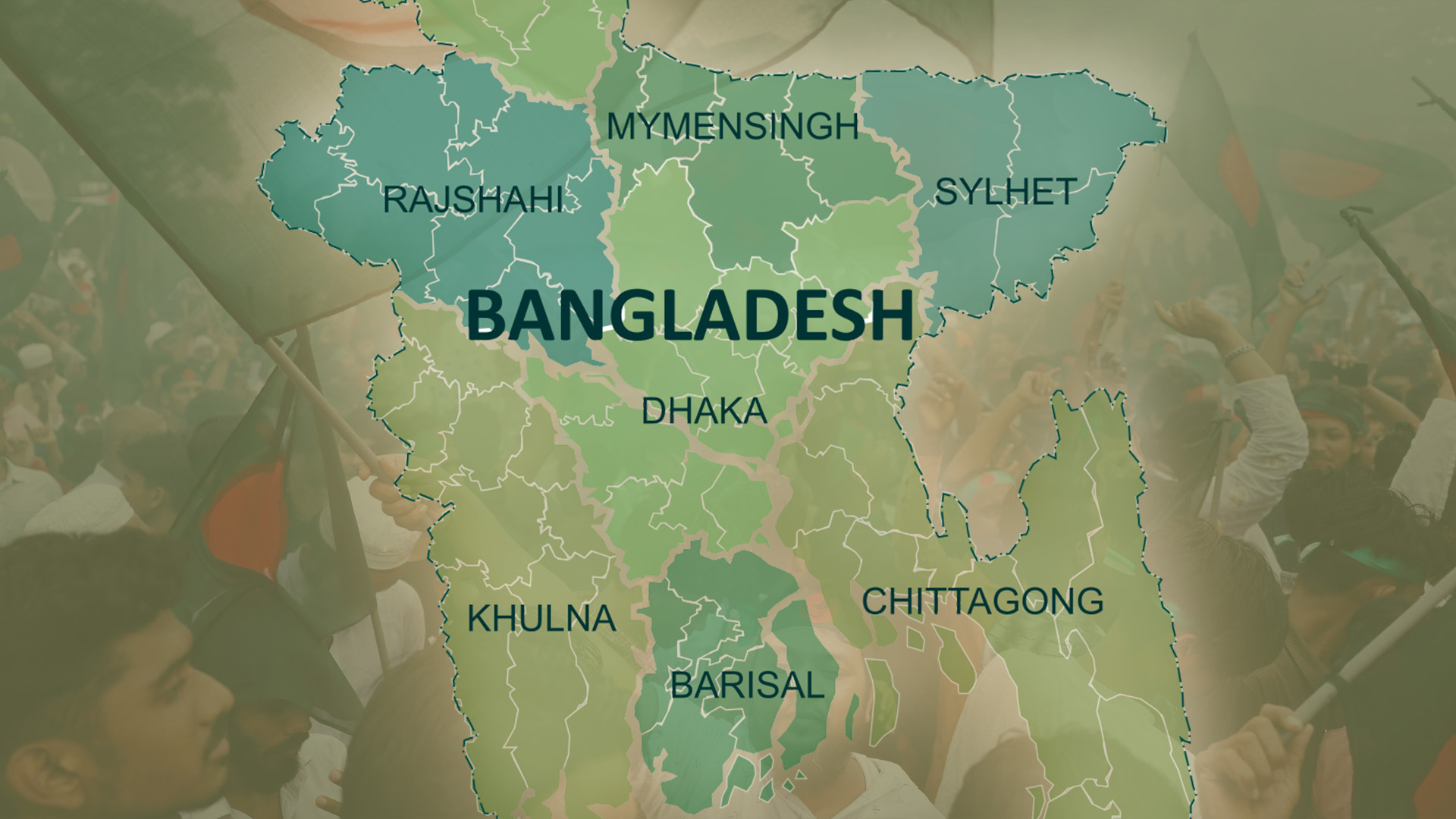
Due to the presence of Al Qa‘ida and IS (Islamic State), which are the two main global jihadist organizations and other local organizations in the country, the Bengal jihadism is a concrete threat not only for Bangladesh’s stability in itself; but, also for the whole South Asia region. However, it does not benefit from the same importance that is supposed to merit, and the analyses about this phenomenon highlight at its core a particular fracture within Bangladeshi socio-political system: on one hand, there are the nationalist and secular groups and on the other hand, the Islamic political figures.
In other words, at the foundations of the nation-state in the heart of Bengali Gulf there is a deep division between two opposite factions that have radicalised the public debate and social tensions within Bangladesh. This latent tension brought to several killings and attacks towards non-Muslim communities. Moreover, this inter-confessional violence was accompanied by the political one provoked by the repressive government of Sheikh Hasina.
However, the riots of July-August 2024 led to the fall of Hasina’s government, and they culminated in her escape to neighbouring India. The new ad interim government finds its leader in Mohammad Yunus, the Bengali Nobel Prize in 2006 who was living in exile in France. Unfortunately, several sources seem to conclude that under his presidency the religious and sectarian violences have increased.
The purpose of this analysis is to examine how this regime change engages with a constitutional fracture embedded within Bangladesh’s socio-political life, and how this fracture intersects with the country’s evolving foreign policy posture — particularly in light of the recent intensification of diplomatic relations with Pakistan, the historical point of rupture at the core of Bangladeshi nation-building. Within this broader process of national identity reconfiguration, the analysis assesses how Islamist and jihadist actors may shape — and be shaped by — this critical moment in Bangladesh’s contemporary political trajectory.
The role of Islam in Bengali nationalism
Unlike its previous Western side, the roots of Bangladesh as an independent state-nation come from an ethnic and secular sentiment rather than a religious ideology: due to the oppression and marginalization of the Bengali population from the West side of Pakistan, a student leader whose name was Sheikh Mujibur Rahman. In the ‘40s, he was a young student at the university of Dhaka and through his speeches he had synthetized all the main reasons of discomfort from the West Pakistani federal authorities: the lack of investments in the Bengali Gulf, the discrimination towards Bangladeshi population from the most prestigious job positions, the imposition of Urdu language on Bengali language, the mother-tongue of Bangladeshi population. His growing popularity led to him to become the first leader and, consequently, as the father of the new nation in 1971. However, its birth has been marked by the political violence between two different factions of the country: the secularists and the Islamists and their radicalization has culminated in the assassination of both Rahman and the prime minister some years later after the independency. In other words, Pakistan and Bangladesh sublate in their original experience the political violence, although Bangladesh cannot be considered as an “ideological country” like Pakistan.
The Bengali political party that embodies the religious side of the country is the Jamaat-e-Islami (JI), the Islamist political party founded in the Indian subcontinent by the Pakistani philosopher Syed Abu A-la Mawdudi. His purpose was the creation of a unified India with Islamic values. This explains why Mawdudi was among the main opponents at the creation of Pakistan; however, Pakistani rulers in the ‘70s will take inspiration from his writings in order to “islamize” Pakistan’s rule of law and, overall, Pakistan’s society.
Regarding Bangladesh, Jamaat-e Islami had manifested its opposition to the independence from West Pakistan and after the independence, it has been banned from Bengali political life. Furthermore, although the leaders of the Muslim Brotherhood in Egypt, especially under Nasser’s government, were persecuted and prosecuted, this dark period officially ended in 1977, when most of them were rehabilitated by Ziaur Rahman. However, as Christine C. Fair argues, what triggered the birth and the spread of Islamic terrorism was the subsequent Zia’s unwillingness to crack down on JI that facilitated the spread of Islamist militancy.
Thus, the brutality of global jihadism movements from the western part of South Asia was slowly reaching the Bengali Gulf as well: it is not a coincidence that in the ‘90s, during Zia’s mandate, multiple jihadist organizations had proliferated in the country like the Harkat-ul-Jihad Islami and Jamaat Al Mujaheddin Bangladesh. After all, Harkat’s leader Qari Saifullah Akhtar was among the jihadists that signed the notorious Bin Laden’s “fatwa” against the western world in 1998. This shows the integration of jihadism narration within Bengali’s borders.
In essence, Bangladesh, like Kashmir, from being a region in South Asia known for its syncretism and its coexistence of several religions and traditions, has become a concerning hub of political and ethnic violence, legitimised by a radical religious framework.
The Bengali Jihadist Galaxy and Its Socio-Political Consequences
One of the oldest Bengali jihadist organizations was founded in 1992, which is the Harkat ul Jihad al Islam. The group benefited from support provided by Osama bin Laden’s International Islamic Front and emerged from former Bengali volunteers who had fought in Afghanistan against the Soviet Union. Their return in Bangladesh coincided with Begum Khaleda Zia regime and they aim to establish of an Islamic State in Bangladesh. This political achievement has not only strongly juxtaposed to the secular roots of the country but has also enhanced and radicalized the socio-political fracture within the country. This point of rupture is fully manifested by Bengali’s popular support towards Taliban, expressed by some declarations of madrasa students when Taliban seized the power in Afghanistan in 2021. Their return to Kabul was seen as «a victory for Islam». Moreover, a police officer stated that some Bengali citizens attempted to travel to Afghanistan to join the Taliban. Moreover, this group has become notorious for its attacks against the Awami League in 2000 and in 2004 and its bomb attacks in 1999, 2000, 2001 and 2004. In addition to that, the group has training camps in the Cox’s Bazar region, and they extend until the neighbour Myanmar. Hence, the jihadist organization supports the Rohingya Solidarity Organization, a Burmese Muslim insurgency group that has penetrated in Bengali territory during the ‘90s pogrom conducted by Yangon. The consequences of that episode still affect Bangladesh’s stability, due to the presence of Rohingya refugees from Myanmar: Bangladesh has not ratified the Refugee Convention of Geneva in 1951, nor does not have appropriate laws related to refugees’ status or the grant of asylum. Hence, Rohingya population must face a scenario of constant instability and uncertainty, with the risk of being exposed of violation of basic human rights. Discrimination and racism in Bangladesh are other daily difficulties, despite they might share the same cultural, linguistic and religious background. Thus, Rohingya fighters have founded their own armed groups like The Arakan Army, which shows how Myanmar and Bangladesh share the same security problems. Therefore, a bi-lateral cooperation could represent a concrete tool to prevent this phenomenon.
In essence, the political agenda of this first group was essentially political (as it was proven by its targets, among them there is the assassination attempt of Sheikh Hasina), and it started to lose importance due to the rise of a new jihadist association: the Jamaat-ul-Mujaheddin Bangladesh. This latter had the chance to gain influence because of the relocation of the Harkat ul Jihad al Islam camps and the arrest of forty-three militants in the 1996. Moreover, Jamaat-ul-Mujaheddin made alliances with several Islamist parties, among of them there is the Jamaat-e Islami. However, in the 2000 they make their first appearance on the public scene killing a cultural activist of Tangail due to his alleged blasphemy comments in a book. This episode is highly relevant, because it can be considered as the first time the targeting members belonging to civil society by terrorists. Another element of radicalization of the political violence is the use of suicide bombers (Parvez and Rahman 2023), an unprecedented tactic from Bengali jihadist groups.
Another relevant organization which is still very powerful nowadays is the Hizb-ut-Tahrir, the local version of the Central Asian Islamist political movement. It was founded in 2000, and it officially banned in 2009, due to its extremist positions and its identification as a national threat. However, its influence began to increase after the 2024 and it has become one of the largest Islamist groups, counting approximately 10-15.000 members. Unlike the previous organizations, Hizb-ut-Tahrir aims to extend its influence within Bengali security forces and among students exploiting the use of social media to broadcast extremist views and to find new recruits. Consequentely, HuT has radicalized the political debate considering as a religious duty the fight against the oppressive government. In other words, HuT organization has actively contributed to deepen the socio-political instability, and it was able to penetrate within the revolutionary force of the country, as it was publicly explicated by the growth of anti-government activities in August 2024 and by the March of Khalifat, in Dhaka on 7th of March 2025.
Simultaneously, Bangladesh has been affected by the rise of both Al Qa‘ida and IS organizations (plus local associations and the Lashkar-e Taïba), contributing to worsen the violence within the country. Regarding IS, despite it has lost most of its capacity after the fall of its headquarters in Syria and Iraq and nowadays, it does not represent a concrete threat to Bengali national security.
In conclusion, the jihadist phenomenon in Bangladesh appears to be a fragmented and external extremist religious groups rather than well-structured and organized organizations, as their local partners in South Asia. Whereas Al Qaida still represents a potential danger for Bengali national interests, due to its links and its relations with local cells like ABT e HuJI-B.
From 2024 and beyond: an uncertain future for a fractured country
In August 2024 Bangladesh has witnessed a regime change promoted by the university student leaders (the same actors who had brought to the independence of the country, almost 50 years ago) that forced Sheikh Hasina to flee to India. The new ad interim government is headed by Muhammad Yunus whose political agenda’s purpose is to introduce a definitive fracture with Hasina’s authoritarian past. From the outset of his mandate, he promised to run the country until free elections, which will be held on the 12th of February. Unfortunately, several sources seem to conclude that under his presidency, the religious and sectarian violence have increased.
One of his first actions as the Bengali leader was to release the prisoners detained by the previous regime; among political prisoners some of jihadist members have obtained freedom from the new Bengali government. This led to an enhancement of Bengali jihadist organizations, like Hizb ut-Tahrir, which have found political allies in the Jaamat-e Islami and the Tehrik Taliban Pakistan. The Counter Terrorism and Transnational Crime (CTTC) unit of Bangladesh Police has officially confirmed the death of three Bengali citizens in Pakistan, due to Pakistani military operations against the TTP. The three boys background proves how the so-called Pakistani Taliban tend to recruit Muslims belonging to poor or low-middle classes and how a part of Bengali population has deep connections with South Asian jihadist networks.
Under Muhammad Yunus’s interim government, Bangladesh has moved to deepen diplomatic, economic, and defence cooperation with Pakistan, including high-level visits and discussions on bilateral trade, cultural exchange, and military ties. This shift has occurred in the context of strained relations with India, prompting observers to frame Dhaka’s engagement with Islamabad as part of a broader strategic realignment in South Asia. The upswing of diplomatic relations between both countries represents a tipping point within the Bangladeshi story, because Bangladesh’s identity may be shaping around the Islamic identity, but in a position of political partner with Pakistan. Thus, an unbalanced management of regional relations could affect the country’s political stability. Moreover, the enhancement of the diplomatic ties between the two countries may represent a flourish occasion for both Pakistani and Bengali jihadist groups to exploit their current links to expand their political agendas risking of deepening the regional level within South Asia.
12 February 2026: A New Future for The Country
The elections held on the 12th of February resulted in the Bangladesh Nationalist Party (BNP) as the new ruling party of the country, whose leader, Tarique Rahman, has become the new prime minister of Bangladesh. With an elected-prime minister, Mohammad Yunus declared the end of his ad interim administration giving his resignations immediately after the results. A key aspect to be underscored is that these elections occurred at a highly critical period of the country, as they constituted the first electoral process after the fall of Hasina’s regime in 2024 and her death sentence in November 2025. In this context, the Awami League was the only political party not authorized to nominate candidates in the February elections. Nevertheless, the party has begun reopening its offices across 15 districts.
It is relevant to notice that the current leader of the BNP party is Khaled Zia’s son, the BNP’s first leader’s wife and one of the key Bengali political figures. As Shaikh Hasina used to be Bangladeshi father’s daughter and leader of her father political party, the Bengali political landscape remains strongly influenced by a limited group of political families. In this way, Bengali political dynamics resemble those of Pakistan, where civilian political power has historically been dominated by two main families, which are the Sharif and Bhutto. In other words, Bangladesh, as Pakistan, could be characterised as a form of “democratic oligarchy” rather than a fully democracy. Such a balance of power may generate disappointment in the Bengali population, particularly in student groups that overthrew Hasina’s government in response to policies perceived as protecting the economic privileges of the people associated with the independency of the country.
Another interesting element is the role of the second main Bengali political party, which is Jamaat-I Islami Party. Several sources indicate that they have assumed a collaborative line with their political rival. At the same time, they remain the main opposition party owing 77 seats in the Bengali parliament. In essence, the fracture within the social fabric and the historical support of the Islamic party to the jihadist movements constitutes factors that could further radicalize the polarized violence within the country.
The election campaigns were marked by episodes of political violence, pointing out the depth of the political challenges and the need of re-stabling order and harmony within the country.
In conclusion, Bangladesh might stand in front of a crossroad; more specifically, Bangladeshi’s way of making politics has dramatically failed, because it has never resolved the abysses within its society. Nowadays the country constitutes a challenging political context in which neither religious ideology nor ethnic and linguistic identity (the two milestones of Bangladeshi nationalism) are enough to build a solid political landscape. In this fragmented picture, the radical Islamic ideology finds fertile ground to spread, nurturing extremist, fringe ideologies and laying the foundations of jihadist narratives that lead to the radicalisation of individuals, thus representing an existential threat to Banglades
The future leadership of Bangladesh should aim to promote political cohesion across the population, recognizing Islam as the faith of the majority while ensuring that the rights and freedoms of minorities are fully respected. Thus, both parties should exploit this rare opportunity to cooperate properly in order to re-build this existential fracture within Bengali society. Such an approach would strengthen social stability and counteract the appeal of extremist movements without undermining the country’s pluralistic fabric.
Disclaimer: The views expressed herein are the author's own and do not necessarily represent the policies or opinions of The Khorasan Diary.